post

The Japanese Canadian Monument

On October 3rd of this year, there will be a ceremony and unveiling of a Japanese Canadian Monument here in Victoria. It’s being built now on a patch of land just south of St. Anne’s Academy and across from Beacon Hill Park.

The monument will include almost 22,000 names of Japanese Canadians who were interned during World War II, along with the names of 3,000 children born during that internment.

It’s shocking that this even happened here in Canada, but it did. And even more shocking was that 77% of them were British subjects, and about 60% were actually born in Canada.

When I was growing up I had lots of Japanese kids as neighbourhood friends and classmates. That’s because I lived in an area of Richmond that was not far from the community of Steveston where there were a large number of Japanese families, mostly because of the fishing industry.

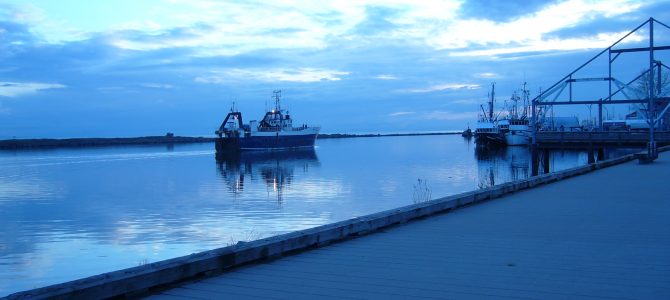
The story goes that in the late 1800’s, a Japanese fisherman who came to Steveston, noticed the high number of salmon in the Fraser River. He ended up writing a letter to the people of his village in Japan, inviting his fellow fishermen to join him, and many of them did.

Of course, there were lots of Japanese, Chinese, European, South Asian and other immigrants who came to Canada over many years and for different reasons. Even in my family — my mother was a Danish immigrant, as were my grandparents on my father’s side.

What I didn’t know about at first, was what many of my Japanese friends’ parents had gone through during the Second World War. And some of my teachers too. One of them told me how his father, who owned a logging company here on Vancouver Island, lost pretty much everything when he and his family were interned. My teacher didn’t really remember the camp because he was so young when they were there, but his older sibling did and never got over it.

The reasoning behind this internment was “national security”, but it was really more about racism and discrimination which ran rampant back then. Japanese fishermen were told by the government to turn in their boats, which were later sold. Of course, none of the money went to the fishers. The federal government also confiscated homes, personal items, businesses, everything, to supposedly “finance” the cost of their internment. There’s a lot more to it, but suffice it to say that it’s an ugly story all around.

After the war they were encouraged to voluntarily repatriate back to Japan or settle somewhere outside of B.C., away from the coast. They were pressured to give up their citizenry, and some of them did. I can’t say I blame them.

In 1988, Prime Minister Mulroney signed a Japanese Canadian Compensation agreement which included an apology and a redress payment to those who were affected and still survived. But how do you really make up for doing something like that to people?

The truth is that you can’t.

The other awful truth is that ignorance, discrimination and racism continues. Especially in some places.

Why can’t we be friends?

So I, for one, am going to show up to the unveiling of the Japanese Canadian Monument on October 3rd. I’m going to look for those old, familiar names from my childhood and whisper a silent “I’m sorry.”

IJ

Note:  The Japanese Canadian Legacies Society says the Oct. 3 unveiling event is at capacity. “We look forward to welcoming members of the public to discover the monument in the weeks that follow, and to return to this permanent place of remembrance, reflection and community for generations to come.”
post

The Way It Is

“Said, hey little boy you can’t go where the others go,
‘Cause you don’t look like they do…”

from “The Way It Is”, by Bruce Hornsby and The Range

I grew up in a brand new subdivision of Richmond BC in the late 50’s and 60’s. Our house was a split level, one of many that were built around that time. As more families moved into the neighbourhood, new friendships were formed, especially among the youngest of us.

When the weather was good, my friends and I played outside all day, every day. In the evening, each kid’s parents would take turns yelling out the kitchen door that it was time to come home.

Right across the street from my house was the elementary school with a park, a couple of baseball diamonds, and a wading pool.

It was a great place to grow up.

Many of my neighbourhood friends were Japanese. This was mostly due to the fact that we lived quite close to the oldest subdivision in Richmond, Steveston, which included a large community of Japanese fishers and their boats. Some Japanese families were descendants of a group of immigrants who originally came to Steveston years earlier because of the fishing. Steveston borders on the Fraser River, so a lot of people I knew back then worked at the cannery, if they didn’t have a boat or a tackle shop.

I’m not sure that I paid much attention to the fact that some of my friends were Japanese. Sure, sometimes their parents would put different food on the table and decorate their dwellings with items I hadn’t seen before. As a result, the kids in my neighbourhood learned about other traditions, and ate sushi long before it was fashionable. But my house had different food too; Danish food, and flags everywhere because my parents were Danish. So “different” seemed par for the course in our ‘hood.

I got a tape recorder for my birthday once, and I was busy taping everything I could think of. I still have some of the old cassettes. On one of those recordings, my friend was over visiting and you can hear my Mom and Dad and I teaching her a Danish lullaby. Then you can hear her teaching us a Japanese song, a little song about a turtle, which we all sang together. “Moshi, moshi, kame yo!” That tape is a treasure.

Every July 1st, Steveston played host to the Salmon Festival and Parade. There was a lot of food, especially salmon, of course. There was the parade itself, and plenty of entertainment going on all day. At one of those festivals, I remember joining in with some other girls and learning a Japanese dance on the lawns of the local Buddhist church.

On another occasion a friend’s father invited me to go fishing with the family. He drove us all in his big camper to the Stanley Park seawall, where he showed us the fine art of smelt fishing. We swam out into the water, pulling ourselves along the fishing net, plucking the tiny silver fish off the net and bringing them back to shore. I got stung by a jellyfish, but all in all, it was great fun.

And then something else happened in Richmond. During the 70’s we started to see a lot of East Indian families move into our neighbourhood. That’s when I first became aware of this thing called “racism”. One East Indian family moved into a house only a block or so from where I lived. There was a boy, maybe 10 or 12 years old at the time, who lived in the house right next to them. He made sure they knew he didn’t want them there. He yelled profanities at them and threw dog excrement on their home. I felt so bad for them. Where did all that hate come from?

Recently, I watched a Frontline documentary called “A Class Divided”. The first part of the story took place in 1968, just after the death of Martin Luther King, Jr., when a teacher, Jane Elliott, decided to talk with her third grade class about discrimination and racism in light of King’s death. But she soon realized that just talking with her class wasn’t really getting them anywhere. These kids came from neighbourhoods that were not very diverse, so they couldn’t really relate to the idea of discrimination.

Instead, Ms. Elliott came up with a two-day “Brown Eyes/Blue Eyes” exercise for her class, basically giving preferential treatment to the kids in the class with blue eyes on the first day. The next day, she reversed the process and the brown-eyed kids got the special treatment. The children’s reaction to each other under those circumstances was unsettling.

Frontline brought them all together years later to talk about how that exercise changed them, which it did in profound ways.

In the past few weeks, anti-Asian violence has become more prevalent, mostly against women. As if that wasn’t bad enough, it really hit home for me when one of my oldest friends, who still lives in Richmond, told me that she was fearful of going out in public, not because of COVID, but because she feared for her safety. She was starting to get dirty looks from Caucasian people, as if it was suddenly okay to treat her that way.

The truth is, of course, that racism has always been around. And we are not born with it, it is taught. Some of my childhood friends may have experienced racial insults, or worse, without ever talking about it back then. But this little blonde-haired, blue-eyed girl had been oblivious to it.

In a perfect world, kids would grow up in diverse neighbourhoods similar to mine with adults around them who encouraged their interaction with each other. I am forever grateful that I was so lucky.