Performance Tips

Cisco Ottawa Bluesfest
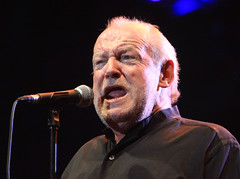
Image by bfest4 via Flickr, Joe Cocker

© I.Woloshen

I was in Grade 5 when I first performed in front of a big audience…in the school gymnasium at Christmas for parents, teachers and students. I was picked in an audition to perform half of the Christmas song “Good King Wenceslas“. I’m not sure why the teacher had two of us share the song…I was ready to do the whole thing myself! It was a definite highlight of my childhood…the first time I heard that applause, I was hooked! It wasn’t until I was older that I began to deal with things like performance anxiety (more of that later), or consider the idea of how I was presenting my material. These days, I’m very conscious of the connection I make with an audience, and the way the songs come across.

I have performed at many open mics over the years, and I find them to be the most difficult performances! There is no time to warm up…sometimes a song or two is what you need to get comfortable with where you are, but then it’s over! If it’s an open mic that I haven’t performed at before, that makes it worse! So many things can affect the performance…the people there, the sound system, if there is one, the room itself, and the other performances ahead of you. Over time, I’ve managed to make a mental list for myself of the things I have to remember when I’m playing, and the things I watch for in others:

1. EYE CONTACT – When I watch a performer with his/her head bowed down staring at the guitar or the floor, I feel disconnected from them. Not only that, but their nervous behaviour distracts me, makes me feel sorry for them, and I don’t listen to the song! Some performers say that they can better focus on the song if they keep their eyes closed the whole time…but what about the people you’re playing to? A performance is literally an exchange of energy between the performer and the audience…if you cut the audience off, they have nothing to return to you! If you find it difficult to look at someone, there are two things you can do. You can either look for the person who is most obviously enjoying your performance and feed off of them, or you can make a person up! Just look out there as if you were looking at someone who was smiling at you, and smile back! I do this all the time, especially if I’m in a situation where there isn’t much of an audience, or I’m in a room where no one is really listening.

I’ve sung at two funeral services…just less than 20 years apart. I was 20 years old at the first service. I had trouble looking at the family who was sitting in the front row, so I stared blankly at a window at the back of the church. I felt my performance was disastrous and underwhelming…my nervousness was more prominent than my song! The second one, I made a conscious decision to look straight at the audience, right into their eyes, and connect the song with each one of them. I was given so many smiles, mixed with tears of course, but it was a beautiful, and ultimately uplifting, experience!

2. ENUNCIATION – You may be a “music” person, not as concerned with getting your lyrics across, but you’d be surprised to know just how many people LOVE lyrics! When the mouth is dry and the brain muddy with terror, even the most wonderful lyrics can be reduced to an unintelligible mumble. Before you even GET to that open mic, practice EXAGGERATING your lyrics when you sing them. Hit every consonant hard, open your mouth WIDE. At first, it’ll feel pretty silly, but it will keep you conscious of getting your message across. When you want someone to hear what you’re saying when you are speaking to them, you make your voice a little louder, look straight at them and enunciate. Think of the same thing when you’re singing.

3. DYNAMICS – If you’re a guitar player, you’re likely to pound away at the strings when you’re nervous, completely dominating your vocal. Practice doing this: when you’re playing the parts of the song when you’re not singing, let yourself pound. When you ARE singing, pull the guitar way back, soften it up, make it weave around your lyrics. Not only will it help your lyrics stand out…it will create quite a dramatic effect to your performance! Try it out!

4. EMOTE – If you’re singing a happy song, remember what your kindergarten teacher said the first time you sang in front of your parents at a school event. SMILE!! If the song is more somber, don’t smile! Nothing more confusing than dark lyrics and a grin. They’ll think you’re on a weekend pass… Performing is very much like acting. You certainly need to “be yourself”, but you are also emoting and re-creating the topic of the song to your audience every time you perform it. Listen to the words as you’re singing them, and try to remember where they came from when you wrote that song!

5. ENERGY – I was told once by my music teacher that I moved too much when I sang. She told me it was distracting. Most of it was, of course, nervous energy. If you move around like Joe Cocker, you’re likely to distract from your song (unless you ARE Joe Cocker, in which case you can do whatever you like :-). But, having said that, music is a full body experience! Sitting or standing with your body as stiff as a board translates into negative vibes for your audience. Move around a little and that will help you relax and also release some of that nervous energy. As Gino Vannelli said: You gotta move 🙂

6. BANTER – If there is a little story behind your song, tell it. Practice ahead of time just so you get the story straight! Two don’ts: Don’t tell the whole story, let the song say most of it. And don’t go on and on, umming and ahhing and losing your focus. But a little chatter between songs gives the audience a chance to connect with you on another level. It endears you to them beyond the songs. One of my most successful banters is when I talk about the nature of the bald eagle before I sing my song “Eagles Eyes”. People love to hear some of the facts behind this amazing creature. It relates to, but doesn’t give away the topic of the song. And almost every time I do that, someone will come up to me after and mention it!

7. GRACIOUSNESS – When you receive applause it is the greatest gift, so stay for a moment and soak it in! I remember a telethon I did once, where right after my two songs, I turned to run off stage. The host at the time was a VJ at MuchMusic here in Canada. She got a hold of me and made me hang around a bit…she asked me a few questions on air, and said “They’re applauding you! Enjoy it!” I’m sure it was my own nervousness that inspired the desire to turn and run…but what I was also doing was, in fact, snubbing the audience by not acknowledging their applause. I don’t “milk it” now, but I do allow myself and the audience a chance to enjoy those few moments! What else do we do it for?

Reblog this post [with Zemanta]

Finding Your Voice

© I.Woloshen

What is it about a lyric that makes the message universal? What is it that makes that message unique? So often, when I’m sent lyrics to critique, reading through them I find they “sound” the same as the last set of lyrics sent to me, but by a different writer! How can this be?

I remember being a teenager and coming to the realization that my thoughts about this world were not so much my own, they were thoughts that I’d picked up from my parents, my teachers and other mature individuals whom I respected. What a realization! It depressed me! I decided that I had to make time to come to my own conclusions about everything, but that was a pretty ominous task. This is the problem I find with newer writers…they are repeating lines they’ve heard a million times…cliché’s some of them, but others just ordinary, uninteresting phrases that make your eyes glaze over every time you read them. They have trouble coming up with a new way of saying something old…well, no kidding! When I wrote my first few songs…maybe the first couple of hundred!…I did the same thing. Not only were my thoughts not my own, neither were my lyrics.

The first hint of what’s coming is when a writer says…”Without the music, the lyrics don’t sound as good, so you should hear them with the music!” If you feel that way about your lyrics, take it as a sign that they are not finished yet! The age old argument, that a song isn’t completely understood without the music, may be true on some level. But that doesn’t take away from the fact that the lyrics may be weak…no music, no matter how wonderful, actually improves the state of the lyrics!

So how do you uncover your own individual thoughts, your unique perspective of the world around you? One of the keys is in your unique experiences…your life is different from many others lives in many ways. The things that happen to you, although they may have something in common with others, also have elements that are different.

For instance…say your whole family goes on a picnic, and the usual things happen…someone brings a football and the men play on a field…people bring baskets of food and drinks. The kids scream, people plaster sunscreen on. These are the common elements of a family picnic. But what might be different from others? That you have an Uncle Derek who has a gold front tooth that he flashes everytime he gets a touchdown. That your mother always brings tunafish sandwiches and makes you eat them before you can have the potato chips…that your cousin smuggled beer in a gingerale bottle because it’s almost the same colour…

The family picnic experience is common, the characters and events are not. When you begin to look for these little things that make your life unique, you begin to uncover your own voice in your lyric writing. Over time, it becomes easier to identify the interesting stuff! You didn’t just wear a suit to the prom…you wore a dark blue suit and the collar of the shirt scratched you in the same place all night every time you danced with this one particular girl…there you go. Later on in this series of articles, I go into more detail…about detail!

Eventually, you may find yourself INVENTING these details because your creative mind begins to feel freer to do so. My writing has developed to a point now where I can mix reality with imagination…sometimes I do that to “beef” a song up. People often ask me what elements about my songwriting are true and what I’ve made up! I almost never tell them! But I think I’ve finally begun to think, and write, for myself…

Reblog this post [with Zemanta]

How I Critique

Song lyrics
Image by matsuyuki via Flickr

© I.Woloshen

Critiques can be brutal. Most of the time, the level of brutality is in direct relation to the thickness of your skin! I used to scoff and bristle at ANY suggestion that my songs might be less than perfect! How dare they!!??

More and more, I come across this scenario…people send me their lyrics for critique, I spend some time on them and send a reply, and never hear another word! Is it that I’m expecting you to love what I say? Not at all…you’re not likely going to agree with everything, in fact you may outright disagree with every word! I am not an insensitive boor who loves tearing other songwriter‘s work apart, but I DO tend to be quite upfront about the weaknesses and the strengths, whatever they may be. Therein lies the point…what do you expect of a critique?

The first and most important point…I can never emphasize this enough…is that it is nothing personal!! I can love you as a person and not like what you wrote! I can just as easily think you’re a twerp and LOVE your writing! Okay, I’ll admit that there are VERY few people in this world that I totally dislike 🙂

Secondly, I am at least equally as hard on myself when it comes to my own writing! I will never say anything to you that I wouldn’t say to myself…in fact, I’m probably easier on you than I am on me because I don’t know how for sure how sensitive you might be. The truth is that I want you to get better…and how can you improve unless you can identify your weaknesses? I want the same for myself.

I do not treat anyone differently…the only exception to this would be a very young songwriter (in age, not experience), in which case I try to be more encouraging. If a nine-year-old came up to you with her first serious effort at drawing a cat…you’d think twice before getting too critical.

Lastly, I compare ALL lyrics/songs with those on a professional level. If you want to be a carpenter, you have to set your goals in such a way that you can compare your work with the best darn carpenter you know. Even if you intend only to be an amateur songwriter, the very fact that you’ve sent your lyrics to someone for a critique shows that you want to be good at it, no? Otherwise, why bother?

In my experiences being a reviewer on Gods Of Music , I’ve noticed a number of things in the feedback artists/bands give reviewers when they get their reviews. This is a really common response…”you didn’t get my song/you didn’t understand my music”. Who’s responsibility is it to get the message across, the reviewer, or the songwriter/artist? If someone doesn’t understand your music…especially if a number of people don’t, you have to start looking at whether or not you are doing enough to communicate in your songs. You are putting yourself out there into the “big, bad world” of the music industry and they are not going to be nice. They are going to be brutally honest. So get used to it!

Another response…”I got a great review at (some other obscure reviewer or article)…”. This doesn’t mean anything…all it does is reflect the wide variation of responses you will inevitably get to your songs. Don’t expect everyone to feel the same about your song…you don’t feel the same about every song you hear!

There are also various other defensive responses you see from songwriters and artists who are pretty new to this idea of criticism. On the other hand, I see many who respond in a mature, gracious manner to whatever feedback they get. If you don’t get the “that’s a number one hit!!!” response the way you thought you would, take a long breath before you put your fist through the wall 🙂 It takes time, tremendous luck and a whole lotta talent to begin to compete with the rest of the music world.

I sincerely hope that EVERY SINGLE PERSON who asks me for a critique reads this very article first, in order that they understand what I’m going to do. To be painfully honest, if you are looking for a pat on the back ONLY…don’t ask for a critique. Instead, play your song to your friends and family. They will ALWAYS accept what you do because they love you!

(PS…Irene is no longer giving personal critiques other than her work with Gods Of Music, but you can request a critique on the Messageboard!!)

Reblog this post [with Zemanta]

Why I Write

Cover of "Born to Run"
Cover of Born to Run

© I.Woloshen

This was a question posed to our newsgroup recently…some questions just get me thinking about the process or the motivation behind writing. I’ll tell you my story if you’ll tell me yours!…

Songwriting seemed to be a merging of two elements for me as a kid…the love of music and the desire to express something. I don’t think I made some conscious decision to be a “songwriter“, but it came quite naturally over a period of time. What it evolved into was a very conscious and thoughtful process of evaluating the events and the emotions of my life, always with an awareness of being able to effectively communicate them to someone else. Aren’t there times when we all have the desire to tell people how we feel? Don’t we all want to be listened to…REALLY listened to?

But there’s more to it than that for me. I’d say that over the many years I’ve been writing, I have “given it up” seriously maybe a half a dozen times. And what I’ve discovered is that I can’t NOT write…it is, as Mary Chapin Carpenter has expressed, the only way for me to make sense of the world around me. And if I don’t have that, then life becomes chaotic again…non-sensical, and difficult to deal with. Writing, for me, is as second nature as all of the basics.

I’ve recently had a serious personal upheaval that has built up over a couple of years…through every stage of it, I have had my writing, and when I look back at the many events I have experienced, both positive and negative, my writing has had an integral part in my ability to understand it. I’ve never had a therapist, even though I’ve had to face addictions and depression. Part of that, I think, is because songwriting becomes my therapist.

This all sounds like a self-centred meandering…but I’ve noticed something else more recently. I have a very accute desire to “entertain”, and many of my songs have taken on that aspect in the last few years, either through humour or “personality”. But songwriting is like that…if you stick with it long enough, it evolves in many ways. Of course, I’m also a performer, so I have this great advantage of being able to act out the song with my face and body…and sometimes I forget where I end and the song begins.

There was a time when I was much younger (!), when I had the idea in my head that unless a songwriter was just expressing a “pure” state of mind, it wasn’t sincere. I never question anyone’s reason for songwriting now, because I know that it comes from many places. There is no need in judging another songwriter’s motives…I wish them success no matter what those motives are. I would like to know what yours are…why do you write? What is your ultimate goal when it comes to your songwriting?

Here’s what Michael Barrett had to say:

“I just thought I’d give a little insight into why I started off songwriting. When I was about 6 (I’m 16 now), a little rhyme came into my head. The rhyme is very daft and I’m not going to print it here unless someone asks me to. Anyway, I forgot about it and pushed writing out of my head. Until I was 12, when I found an old Bruce Springsteen CD of my fathers. At first I only listened to track 1 (Born To Run), but then widened my knowledge by playing the whole CD, and eventuall became a big fan. I also started listening to Bob Dylan, Bob Seger-all the ‘oldies’ as they call them. One day I turned on the radio and it was tuned to Longwave 252-people in England may recognise it as the popular music station. They were playing dance music. I thought ‘eww'(never really liked that hip-hop stuff) and tuned it to BBC Radio 2 (because there was a Bruce Springsteen interview on).

“Eventually I heard a song by a band called Stardust, called ‘Music Sound Better With You’. As soon as the first few bars had been done, I knew I didn’t like it. But I kept on listening to the end. I thought ‘gee I bet that song doesn’t do well’. Then I discovered that it was on almost EVERY dance album. I mean, the song was so dead-the ryhtm had no alterations for chorus or bridge (because there was none), the only lyrics were ‘hey baby music sounds better with you’, I could carry on all night…..Sure there are quite a few good bands out there but this one song REALLY got on my nerves-I’ve even been known to leave shops and cafes when it comes on- so I decided to do something about it and immerse myself in rock, blues, folk. Then I started writing poetry, I can remember the first one I wrote was about Rememberence Day, still got it lying around somewhere. Then I picked up my first guitar and immediately fell in love with it. I began finding things out about myself through the passion I could evoke by certain chords, strumming patterns, slow or fast tempos, soft or hard strums. Soon I found myself thinking ‘wouldn’t it be good if I could bind poetry and music’, and I did-my first song was devoid of chorus, bridge, just 6 lines per verse, and a pretty simple chord pattern-as first songs usually are, this was just my way to cut my teeth in the methods. I found myself thinking deeper and deeper, writing for other people, and mostly myself (the reason why most of my songs are about love and rejection). I was hooked, felt as if I was delving into what I really am and finally actually enjoying the fellings I have, whether negative or positive.

“So going back to your main question, why did I start songwriting? Many reasons:

-So I could get profit (although this one faded eventually)
-So I could be like my heroes (to this day I want to meet Springsteen)
-To seperate myself from the masses
-To try to forget about Stardust

But I believe that my main reason, and maybe many other’s reason, is TO DISCOVER YOUR TRUE SELF.”

So what’s your motive, what made you begin this wonderful craft? If you’d like to express yourself about it, why not try my songwriting messageboard, sign up and participate!

Reblog this post [with Zemanta]

Meaning and Metaphor

© I.Woloshen

Recently, someone in rec.music.makers.songwriting posted a question as to why many of the songwriters in the group didn’t seem to make much use of metaphors in their lyrics. Actually, I’ve seen them used quite a bit…but I do think that some writers are intimidated (even by the word!) and don’t know how beautifully it can paint a picture if used well. I’ll try to give some examples as I go, but first I’ll give you the definition if you’re not quite sure what a metaphor is:

In the Webster’s Dictionary, “metaphor” is defined as: “Transference of a term to something it does not literally apply to…”. Probably the most familiar setting of a metaphor would be with the words “like a” as in “I ran like a bat out of hell”. Someone recently pointed out to me that this is more accurately called a “simile” which is defined as “comparison, especially in poetry”. To insert “like a” does technically make a difference in how you define the term, however, the idea is the same. Here’s a line from a Shawn Colvin song called “Steady On” on her album of the same name…

‘I am weaving
Like a drunkard
Like a balloon up in the air
I am needing a puncture
And someone to point me somewhere’

What’s nice about these similes is that she carries the image through to the rest of this verse…you can really let your head go off in some interesting directions lyrically when you get a vision of something you’re trying to describe. The fact that she’s weaving like a drunkard could imply that she’s admiting to irresponsibility or being out of control…the “puncture” line seems to imply that she really needs a dose of reality. The interesting thing about similes and metaphors is that although they may be trying to evoke something specific, they can, in fact, take the listener on a very personal trip. I’ve found many times that people have interpreted my songs in their own way. I like the idea of someone being able to put their own stamp on something I’m expressing. You can’t really be too inspired with lines like “You broke my heart” after you’ve experienced some truly fascinating lyric-writing. Here’s an example in an early Joni Mitchell song called “You Turn Me On (I’m A Radio)”(definitely a metaphor!!):

‘Oh honey you turn me on, I’m a radio
I’m a country station, I’m a little bit corny
I’m a wildwood flower waving for you
I’m a broadcasting tower waving for you’

Here she personifies what she is describing…I can only imagine her getting into the visuals of some small Saskatchewan town (in the Canadian prairies where she grew up) pulling out and playing with all of these images. This is only one of many, many examples of Joni’s craftiness and creative use of imagery. She has the uncanny knack of stuffing a novel full of images all in one line. Everytime I go back and listen to a song of hers I’ve heard many times, I find some new dimension to it, a new meaning.

Which brings me to the “meaning” part of songwriting. Cliché’s are one thing, but over-used phrases as the “You broke my heart” line above, really don’t have any life of their own. They don’t evoke emotion, which is a very powerful tool for a songwriter. How can you bring your song to life, and give it deeper meaning? One way is to listen to examples of others who have a knack in this area. Another is to try free-association when you’re writing. Don’t worry about the meter or anything else, take the line and sit down and come up with as many images you can around it. For example, Joni’s trick of being a “wildflower waving for you”…the wildflower waving is a great visual, and the fact that it’s waving “for you” and not “at you”, gives it a supportive, positive feel. All that in one little phrase!

In a song I wrote (uh-oh, she’s getting desperate now!) called “Fusion & Fire”, I had alot of fun playing with metaphors using the universe (literally) and planets as a theme for long-lasting love. I also used Joni’s trick of personification in that one. Mary-Chapin Carpenter wrote a brilliant song called “This Shirt”…in it she basically used the shirt as a time-reference for a love affair, where it travelled, how it was used as a pillow, the sleeve rolled up with a pack of cigarettes, how she wears it now when she’s doing the housework…from a stinky old shirt, you get so much! Here’s a bridge from a Shawn Colvin song called “Set The Prairie On Fire” from her “Fat City” album. This bridge gets to me everytime I hear it…it just screams passion:

‘In the cool dusk of horses
Through the rusted wires of sleep
With our arms around midnight
We’re headed for release
We go riding in the wind
We go riding in the dark
Riding, riding…oooh’

Now, don’t you wish you could fire up those kinds of images? Don’t ever compare yourself with others, that’s a waste of time because you are unique. But DO admire others clever crafting, reading or listening to it could put you in exactly the space you need to be more creative with your own writing. And try a metaphor today!

Reblog this post [with Zemanta]