When It’s Time To Record Your Song


There are a number of things to consider when you decide that your song is ready to be recorded.  As a songwriter, you want the best representation of your song;  a recording that makes it stand out without creating too many distractions or losing focus.
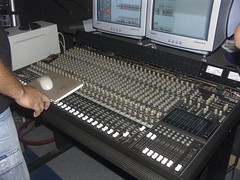
The studio board.
Image by baldguitars via Flickr

Before you make the decision to record a song, make sure it is in its final draft! I know it sounds obvious, but some songwriters are too quick to rush into a studio because they’re all excited about a new song. Does it stand up to the test of time? Have others who can give you some valuable feedback listened to it yet? If you’re a performer, have you performed it in front of an audience? Don’t rush the recording part!

If you have your own recording setup, you’ll recognize some of the terms I’m going to use in this article.  However, I’ll explain or define them as I go for those of you who are new to the idea of recording. First of all, I wrote an article quite awhile ago on the recording process for beginners which you can find here, but that has more to do with the technical aspect of recording.  If you are just about to go into the studio to record a demo, for example, you might want to think about what you want before you get there.

1. Intro Too Long – I can’t even count how many songs I’ve heard recorded by songwriters in their studios or as a demo that take FOREVER to get to the first verse!  Don’t make the mistake of creating an intro that’s so long it’ll make the publisher hit the eject button!  In fact, if you can manage to, don’t have one at all!


2. Do you need an instrumental break? –  If you are pitching a song, a wailing guitar solo is unnecessary and may actually detract from the song itself.  If you are a band, then by all means, put in the wailing guitar solo.  Think about who is going to hear this recording and what will be important to them.

3. Out of Tune – this is something I mention in the recording article too…you’d think it would be obvious, but make sure that your instruments are in tune before you record!  AutoTune (a handy little software device that corrects pitch) can do some magic, but often it can distort the sound of the instrument (including your vocal!), so don’t rely on that.

4.  Leave A Little Room for Arrangements – As a solo performing songwriter, my instrument ended up being the whole band.  Over the years I got better at playing my guitar so that it became the percussion (if necessary), the bass, and everything else I needed to fill the musical “space” when I was performing.  But when I would go into the studio, I’d have to learn to play it less or simplify it so there was room for the other instruments!  You may not be recording your instrument at all because maybe you prefer to leave it to more professional musicians.  But if if ARE, you have to think of your instrument differently when you get into the studio.  Let the bass player do the bass runs, let the drummer drive the rhythm, and unless you are an amazing instrumentalist and it is truly a part of your “sound”, let your instrument be present without being too dominant.  You might consider spending some time with the other musicians ahead of time, if possible, to work out how everything is going to go together.

5.  Keep It Tight – another problem I often hear in demos is when instruments and drums are too loose.  You don’t want to over-quantize (another handy little software device that adjusts the timing of especially midi instruments), because then it won’t feel “real”, but you do want to find the pocket.  I love that word, “pocket”.  I heard Quincy Jones use it in reference to having all of the instruments hit the right note at the right time with just the right velocity (volume) and feel.  Not easy to do, but worth the effort!  One note to think about:  let the drummer drive the rhythm.  When people are recording instruments especially, they try to anticipate the beat of the drummer, and often play just the slightest bit too soon.  Then the song feels off kilter and too loose.  Practice with a metronome or a click track.  Just Google “metronome” and you can find them online.  When you’re working with one, let the click pull your rhythm…it takes a little work but it will improve your timing immensely.

6. K.I.S.S. – when in doubt, less is more.  Don’t try to stuff too many instruments and bits and pieces in there…it’s about the SONG.

7. Lyrics Up Front – It’s about the SONG.  Don’t bury the lead vocal in behind a whomping bass and crashing cymbals and wailing guitar.  You want them to hear the lyrics, right?

8. When You Invite Friends To Play – of course, we all like the idea of having people we know play on our recordings.  But recording isn’t like jamming, it can be very repetitive in terms of getting just the right sound and licks, fills, etc., and then repeating that until everything fits just right.  It can start to feel a little mechanical after awhile.  I once had a guitar player (not a friend, by the way!) come in to do some lead work on a recording.  He had several guitars, lots of effects and certainly had some talent.  But he could not repeat something he had done before or even remember what he had done!  He really was only good at jamming.  In the end I managed to catch a few bits that I could use, but it wasn’t very helpful in terms of adding some real texture to the recording.

Most of these apply, more or less, to a situation where you are singing and/or playing on the recording.  However, some of you are not singers and would rather have someone else do the demo.  There are plenty of demo services around, even online, where you can send a rough recording of the song and have them do it.  It’s important to educate yourself enough so that you can ask for what you want.  If you “hear” things, like instruments playing in particular parts, or you want a certain sound or feel (soft, energetic, etc.) then you have to communicate that to the people recording your demo. You might be too intimidated by the process and just want to give it over without any input, however you might not get what you expect in the end.  Whoever is doing your demo will, and should, ask you lots of questions first in order to establish what will be needed.  Here are some other tips:

1.  Ask – for a demo or sampling of their recordings before you hire them, so you can assess whether or not they can do what you want.  Make sure they are comfortable in the genre your song is in.

2. Trust Your Gut –  If you’re not comfortable with the person you’re communicating with, then go elsewhere.  It’s important to feel that you can say what you want, even if you don’t exactly know how to say it!

3. Educate Yourself – as I said before, the more you know about the process, the more confidently you can ask for what you want.  If you don’t understand something, ask.  There are lots of places on the internet  where you can research what happens in a studio and the terminology that is used.

4. Everything Up Front – most studios will offer you a package deal, one price that covers everything that you want included.  If you want some changes after the fact, you’ll have to negotiate that, but don’t let them nickel and dime you.  Be sure that it’s clear what you are going to get for your money before you proceed with anything.

It’s exciting to hear your song recorded properly for the first time. If you take the time to consider everything I’ve mentioned above, there won’t be any unpleasant surprises and you’re ready for the next step…putting it “out there” for the rest of the world to hear :-).

Reblog this post [with Zemanta]

Beware Of Bogus Tips!


As part of my ongoing search for songwriting websites and blogs, I have a Google Alert for “songwriting tips”.  Whenever anything is posted whether it’s news or a new blog post, I get an email with a link to it.

Songwriting contest
Image by ici et ailleurs via Flickr

It struck me recently that I might be reading the same thing over and over again, but I couldn’t remember where.  The only clue I had was that there was always a link to a website selling a Takamine guitar and another one called Solobis which is about making money blogging.

So I did a Google search using one phrase from the article and found that there were 69 blogs with the same article!  You can check for yourself here.

The web has always been a place where you have to take what you find and what you read with a grain of salt, but this new way of making money blogging just disappoints me.

I mean, the article is fine.  But the whole idea is to get you to buy something, not to help you write better songs.

You can count on this website to always have original articles that you will find nowhere else, and the websites that I recommend in my links section are the same.  There are no duplicate articles with a hidden agenda to “make money blogging”.  So what I recommend to you is to subscribe to your favourite blogs (including mine!) and support the people who really are trying to help you along your songwriting path.

Reblog this post [with Zemanta]

Million Dollar Baby, or Not?


The video below will play automatically, so hit the pause button on the video if you’d like to read the article before hearing the song!

“Never Is Forever” is Floyd Murray’s lottery ticket to a happy retirement, if he has his way.  He is offering the copyright to this song for auction on eBay for a million bucks.

When I read the CNN iReport it said that a search of “hit song copyright”, including quotes, would bring up the auction, which was reportedly to begin on March 26, 2010.  However, when I went to eBay and did the search, it did not come up.  Did he perhaps have second thoughts?  Here is an excerpt of his response when asked why he is selling the rights to the song:

“My age and my life situation (and the current industry and economy) dictates that I won’t be going on tour any time soon to promote and perform my music, and I haven’t actively pursued any publishing or licensing deals. I’ve been sitting on this song, and every time someone hears it, they tell me how great it is and ask why it’s not on the radio. So I’m just offering it up to someone who sees it on its merits and can take it and run with it. I guess I’m selling my pension plan. I’m creating my own economic stimulus package.”


I listened to the song and you can too on the video posted below.  While I appreciate that Mr. Murray may really only be hoping to create a little nest egg for his retirement, the fact that he has been sitting on it and not pitching it to publishers himself first, was a mistake.  What most songwriters with any experience will tell you is that you need decent and honest feedback from people who are objective and know what they’re talking about.  Your friends, family and acquaintances don’t count!  Some smaller publishers will respond within a few weeks as to whether or not they are interested in the song, and sometimes they will give some feedback in their response.

Why am I saying all of this?  Because as far as I can hear, the song has some glaring flaws.  First of all, it has the same chord progression throughout, the same three chords, so there is no contrast between verses and chorus (if, indeed, there was a chorus).  That alone wouldn’t necessarily spell disaster, except for the fact that it’s a county song and most country publishers or labels won’t even let you in the door without a big, splashy chorus.

Secondly, the word “never” is used ad nauseum.  Now I know that the song has “never” in the title and this is obviously the theme, but using it in almost every line is enough to put anyone to sleep.

Which is why I only made it through the first half of the song.  So he may have actually switched the chords up at the end of it, or used the word “never” less as it went along, but I wouldn’t have heard it.  And neither would most industry-types if they threw it on in its present state.  Which is the sad reality:  most songs sent to publishers or industry people aren’t listened to past the first verse and chorus (if there is one).  It doesn’t take long for them to decide that “this ain’t it.”

It could very well be that Floyd Murray is just trying to get a little attention for himself, but actually I think he is probably sincere and really thinks he has a hit on his hands.  Which kind of reminds me of that guy I wrote about a couple of months back who wants to sell a million CDs.  I wonder how he’s doing? [Update Nov/12…his video and website disappeared and now he has only a website with himself doing mostly cover songs. So much for the million sales!]

I wish them both luck.  This is the day and age when it takes a lot of creative thinking to come up with ways to draw attention to yourself and your songs.  But first, the songs have to be good.

IJ

Nothing To Write About?


In another article called Songwriting Topics I went through a myriad of things you can do to inspire yourself in terms of what to write about (what?  you don’t have anything to write about? :-)), and most of them were the obvious such as using your own life experiences or those of others.

Cliffs of Moher – Edge of the World
Image by janusz l via Flickr

But what if you are bone dry in terms of ideas?  Where else can you get them?

I’ll focus on a few places on the web that might help you get some ideas.  In fact, you might learn to get really creative about being creative!  The web is an excellent way to get ideas if you know how to use it and what’s out there.


Interestingly enough, as I’m writing this blog I’m looking at something called Zemanta.  Zemanta is essentially a media and article/information gallery that you can use as a plugin in Firefox or in a WordPress blog like I have.   You can try it out on the demo page on their website.  Type anything in the text box and Zemanta will come up with images, articles, links and tags relating to whatever you’ve typed.  It’s a pretty clever little tool.

Which brings me to another idea.  Pictures can be really inspirational sometimes, especially photographs.  If you go to a website like Photography.com, you can browse through hundreds of stock photos;  pick a subject like flowers or landscapes and see what you can come up with.  I often peruse a website called BOOOOOOOM! which has photography, but also art and sometimes even videos, all in blog form.  It’s a very cool site to look through even if you’re not looking for something to write about :-).

Okay, but what if you’re looking for musical inspiration?  Aside from listening to other songs, where else can you get some musical ideas?

A few months back I found a really neat little site called Jam Studio where you can literally create a whole music bed right on the site.  It leads you through entering some chords and picking some instruments, including drums, bass, guitar and piano and even a “feel” or genre like country or rock.  Then voila!  You can create a whole song in any key and come up with all kinds of ideas!  Try it out.

And last, but not least, I wrote an article for the Muse’s Muse awhile back where I featured an NPR series called “Project Song“.  The whole idea is that an artist or band is given a set of photos and words to choose from, and is given two days in a studio to come up with a song representing them.  It is a very interesting premise and on the Project Song website you can watch a video showing how songwriter Nellie McKay came up with her song “Cavendish” using the tools at hand.

You might do the same for yourself…take a random photo from one of the websites I recommended and go to a dictionary and pick out a word or two and see what you can come up with!

In fact, I’m thinking of coming up with a songwriting challenge to do exactly that.  Keep your eye on this blog in the coming weeks…!

IJ

Reblog this post [with Zemanta]

What Fred Taught Me


I started writing songs when I was about 12, but it wasn’t until I was almost 20 that I took my first songwriting workshop. It was an 8 week course, facilitated by a fellow named Fred Booker. Fred was a real character and a great teacher, who was born in Chicagoand ended up living in Canada for reasons I never quite figured out. He would teach songwriting classes at Douglas College in Vancouver, but he also traveled and performed constantly, applying for arts grants to record and tour. So he pretty much made his living from music, not an easy thing to do at any time!

Fred Booker
Fred Booker

His style of writing was very blues-influenced with a smidgen of folk, totally character-driven and very entertaining. In the course he talked about exploring the guitar and doing different things with it without getting too much into theory, which was just what I needed and something I still remember. Sometimes he would sit in front of the class, clasping his head in his hands, looking for the right words to make his point, and then he’d deliver this compelling and passionate monologue on some aspect of songwriting that would mesmerize me. Yes! I knew EXACTLY what he meant! And there was a word for the technique, and others did the same thing too! Fred’s course introduced me to the lingo that described what I had always done instinctually, without labels or any thought to what I was actually doing. I knew what a verse and a chorus were, but what I didn’t have names for were things like “tension” and “contrast” and “dynamics”. I was so thrilled to listen to someone speak in my language and put words to my efforts.


At the risk of sounding like a prima donna, I was one of the stronger songwriters in that class. I was not very good when I think of it now, but most of my classmates were less experienced than I was. I was also the biggest chicken. When it came to introducing a new song to the class, which we each had to do at least once over the 8 week period, I was tortured with nerves, and on the night of the very last class where we each had to perform a song, I didn’t show up. What a coward, eh? 🙂 And here I am many years later, writing articles about songwriting for newer inductees, thinking about what Fred taught me and realizing how important it was for me to understand the mechanics of writing, not just the inspiration behind it. Being inspired is one thing; just letting it all spill out in one big blob of emotion and getting it out of your system.

But the craft is something entirely different…sometimes I think the crafting of a song is where true inspiration kicks in, because you have to mull it over and over and find some way of tying everything together, which takes so much time and patience…and ultimately talent! What Fred taught me was to THINK about what I was saying, to push my musical and lyrical boundaries and most importantly to enjoy the process. He made me think of myself as a songwriter, not just a person who happens to write songs.

What’s the difference? I think your attitude about yourself and your purpose changes when you take your craft more seriously…I don’t mean that you become an arrogant snit; in fact there is something humbling in the recognition that you can do something that really affects people. Not everyone hits the point in their songwriting where they want to take it outside the bedroom (or wherever they write!) into the rest of the world. Some never desire more from it than a way to entertain themselves, and so it should be. But some of us feel that nagging or yearning for others to hear what we’ve created.And even though I was a coward at the time, I realized the importance of making my message clear, and I took that new understanding and still carry it with me.

Fred came to see me perform at a place called the Soft Rock Café in a Vancouver neighbourhood called Kitsilano months after that last class . He came up to me afterwards and commented on one particular song where I had done some of that exploration of the guitar neck that he had spoken about. I knew he had been listening with a critical ear the whole evening, and it made me nervous, so I was very pleased to get a positive response. Not long after that, when I joined a band along with another fellow who had also taken Fred’s class, Fred came to visit us one night and we enthusiastically discussed songwriting for hours. It was a heady time. And then I lost touch with him.

Recently, I tried to find some trace of him, using the internet of course 🙂 I found a link to a book of poetry where one of the contributors was a guy named Fred Booker, but not much else. I still have his album “On The Road”, autographed, of course, and my guess is that Fred is probably still out there creating something, whether it’s a song or a poem, still thinking about the process and maybe even still teaching, who knows? I never had the chance to thank him for all that he gave me, so I’ll do it now. Thank you, Fred! What a great teacher you are!

[PS…this was an old article written perhaps five or six years ago that I recently decided to dust off and re-post. Just for fun I thought I’d look for Fred again too, and to my surprise I found him!  He had recently written a book called “Adventures in Debt Collection” and was still living in the Vancouver area.  I also found a picture of him, posted above.  As I researched more into his book, however, much to my sorrow I discovered that Fred passed away in 2008 at the age of 69.  I’m very sorry I never had the chance to thank him for his enthusiasm and inspiration.  I found him and lost him again in the same day…there must be a song in that…IJ]

Enhanced by Zemanta